


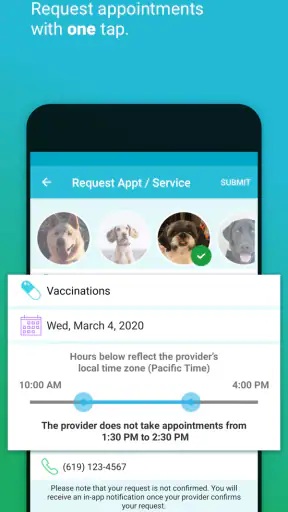
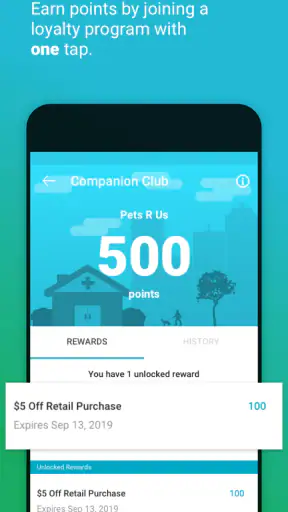
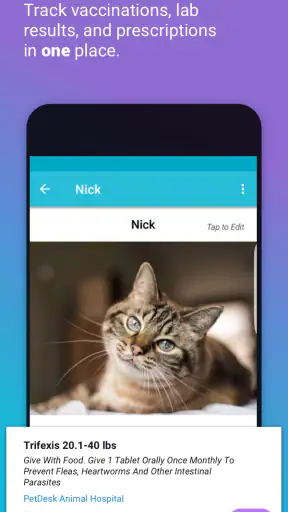
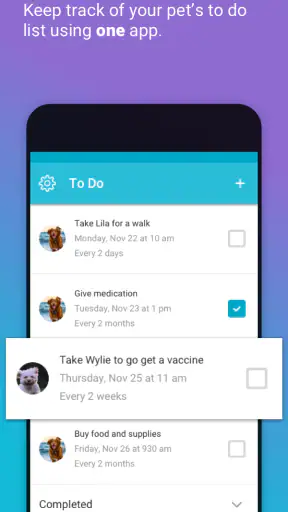

I usually judge a pet-care app by a simple question: does it make an already busy routine easier, or does it become another task to maintain? PetDesk - Pet Health Reminders is aimed at the first outcome. It is a free lifestyle app from PetDesk that brings pet-related organization onto the same device I already use for calendars, messages, and daily planning. After spending time with it, I see its strongest value in reducing the mental load around recurring care rather than trying to replace a veterinary professional.
The idea is especially useful for people who care for more than one animal, share responsibilities with family members, or regularly lose track of appointments and preventive routines. The app has been available since July 9, 2013, and its current version is 10.0.1. That long presence gives it the feel of an established companion rather than a short-lived experiment. It is free to use and rated for Everyone, which makes it approachable for a household where several people may need access to the same kind of information.
How PetDesk feels during everyday use
Speed expectations when checking care information
PetDesk is not the sort of app I open for entertainment or extended browsing. Its usefulness depends on quick access: I want to check a reminder, review a pet detail, or confirm what needs attention without navigating through a maze. In that role, a focused pet-care app makes more sense than trying to force a general notes app or a phone calendar to understand the difference between a vaccination, a routine visit, and an ongoing care responsibility.
My expectation for an app like this is therefore practical rather than flashy. The important question is whether the main information is easy to find and whether the interface encourages me to keep records current. PetDesk’s purpose is clear enough that I do not need to learn an elaborate system before getting value from it. That clarity matters when I am standing in a waiting room, preparing for a visit, or trying to remember which pet needs attention next.
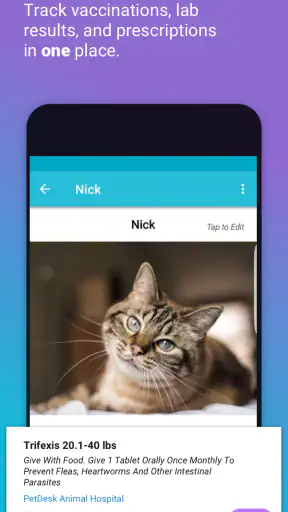
A useful habit is to treat the app as a central reference point instead of entering isolated reminders whenever something comes to mind. I would first establish each pet’s basic profile and then add care items in a consistent order. That small bit of discipline makes later checks faster because I know where to look and what kind of information belongs there. The app cannot compensate for incomplete entries, so the quality of the experience depends partly on how carefully I set it up.
The store rating is a strong 4.8 average from around 32 thousand ratings, with roughly 13 thousand written reviews. Those figures suggest that the basic concept works well for a large group of pet owners, although a rating cannot tell me whether the app fits every household. Someone wanting a simple checklist may find it more structured than necessary, while someone managing detailed medical records may still need another tool beside it.
What happens during heavier use
The more demanding moments are not necessarily technical. They happen when several care responsibilities overlap: multiple pets, repeated reminders, appointments, and information that needs to be found quickly. In those situations, the value of PetDesk comes from keeping pet-related tasks together rather than scattering them across a phone calendar, paper documents, and memory.
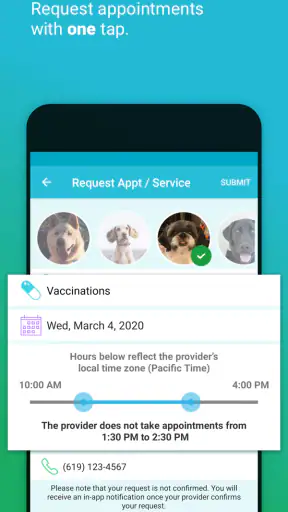
Consider a realistic Saturday morning. One dog needs a routine appointment, a cat has a separate care reminder, and another family member is asking what information should be taken to the clinic. I would rather open one pet-focused record than search through personal calendar entries and old messages. The gain is not just speed; it is reduced uncertainty. A dedicated context helps me distinguish one animal’s needs from another’s.
For households with several pets, I would use clear names and consistent details from the beginning. Avoiding vague labels such as “appointment” or “medicine” is important because those labels become confusing when several animals are involved. A more useful approach is to make each entry immediately recognizable by linking it mentally to the individual pet and the type of care. This is one of the less obvious trade-offs of a reminder app: organization at setup determines how much time it saves later.
PetDesk is also more useful when responsibility is shared. If one person normally handles appointments but another person handles daily care, a common place for pet information can reduce repeated questions. I would still agree on who is responsible for acting on each reminder. A notification alone does not guarantee that somebody has completed the task, so the app works best alongside a simple household routine rather than as an invisible substitute for communication.
Heavy use can also expose a limitation. A pet-care organizer is only as reliable as the information entered into it. If I postpone adding a new appointment or fail to update a changed plan, the app may remain tidy while my real-world schedule is not. That is not a flaw unique to PetDesk, but it is an important practical boundary. I would review the information after every veterinary visit instead of assuming that one initial setup will remain accurate forever.
Reliability and recovery after interruptions
For this category, reliability means more than opening successfully. I want to feel confident that the app remains useful after a busy week, a changed appointment, or an interruption while I am entering information. A pet-care tool should support recovery from ordinary human mistakes: forgetting to finish a record, entering something under the wrong pet, or needing to reconstruct what happened after a visit.
My preferred workflow is to update records while the information is still fresh. Immediately after a clinic visit, I would check the relevant pet profile, review the next care action, and make sure the reminder reflects the new plan. Doing this at the point of change is safer than relying on memory several days later. It also gives me a clear recovery path if I ever wonder whether a task was recorded.
Another sensible safeguard is to avoid treating the app as the only place where urgent or medically important instructions exist. PetDesk can help organize reminders, but it should not replace direct veterinary advice, emergency services, or documents that a clinic specifically asks an owner to keep. If a reminder concerns a serious condition, I would verify the instruction with the veterinary team rather than relying on a notification as though it were a diagnosis.
The app’s large user base also makes it feel less risky as a choice for ordinary pet organization. It has passed one million installs, which indicates that it is not an obscure utility used by only a handful of people. Still, popularity is not the same as a guarantee of perfect performance on every phone. I would keep the application updated, check important entries periodically, and avoid assuming that any digital record is immune to device problems or user error.
Recovery is easiest when I use a repeatable routine. After adding a new appointment, I would immediately look at the pet’s overall schedule rather than closing the app straight away. That second glance can catch a wrong date, a missing pet association, or a reminder that does not match the conversation I just had with the clinic. This is a modest step, but it is more valuable than adding a long list of entries and never checking how they appear together.
Device constraints and resource expectations
PetDesk is available for devices running operating system version 10 or newer. That requirement is reasonable for many current phones, but it matters if I am trying to revive an older device for a family member or use a spare phone as a household pet-care station. Before planning around the app, I would check the phone’s operating system rather than assuming that every older handset can run it.
The app’s role also affects how demanding it feels. This is a lifestyle organizer, not a graphics-heavy game or a media editor. I would expect its resource needs to be modest compared with apps that constantly process video, location data, or large visual libraries. Even so, perceived speed can vary with the age of the phone, available storage, background activity, and the condition of the operating system. I would not judge the app in isolation if the entire device is already struggling.
On a newer phone, the main concern is likely to be convenience rather than raw performance. I want the app to fit naturally into quick checks without making me wait or forcing me to repeat entries. On an older compatible device, patience may be more important during startup or when moving between sections. The most sensible test is personal: install it on the device I actually use, create the pet records I need, and see whether the normal workflow feels comfortable before depending on it for important routines.
Storage planning is another small but useful consideration. A pet organizer should not be allowed to crowd out essential phone space if the device is already nearly full. I would keep the operating system and the app current when possible, but I would also avoid filling the phone with unnecessary duplicates of pet documents or images. Good device housekeeping helps any organizer feel more responsive and makes recovery easier if an update or reinstall ever becomes necessary.
The Everyone content rating makes the app suitable for a broad household audience, but that does not mean every family member will find the interface equally comfortable. A child may understand reminders but should not automatically be treated as the person responsible for medical decisions. For older relatives, the best setup may be a short routine and clearly named pets rather than a complicated attempt to record every detail of an animal’s life.
Where it beats ordinary alternatives
The usual alternative is a general calendar. That works well for a single appointment, especially if I already live inside a calendar every day. The weakness is context: a calendar entry may tell me when something happens, but it does not naturally organize the pet as the central subject. PetDesk is the better fit when I want care information grouped around the animal rather than mixed with work meetings, birthdays, and errands.
Another alternative is a notes app. Notes are flexible and excellent for writing long observations, but flexibility can become clutter. I can easily end up with one note per pet, a separate note for clinic details, and scattered reminders that are difficult to review. PetDesk’s advantage is its focused purpose. Its disadvantage is that it may feel less suitable for owners who want a completely free-form journal or a highly customized medical spreadsheet.
Paper records still have a place, particularly for people who prefer writing by hand or who want a physical folder for clinic paperwork. Paper does not depend on a charged phone, but it is harder to search, update, or share around the home. I would choose PetDesk for recurring organization and use paper for documents that I specifically need to retain physically. The two approaches can complement each other rather than compete.
I would also distinguish PetDesk from a full veterinary record system. An owner may need direct communication with a clinic, professional interpretation, or detailed documentation beyond the everyday reminder layer. In that situation, PetDesk can be a helpful personal organizer, but it should not be mistaken for a replacement for the clinic’s own records or for professional care. That distinction is important for anyone managing a complex condition.
Who will benefit most, and who should skip it
I think PetDesk is a strong match for first-time pet owners who are building routines, families who divide responsibilities, and people with several animals whose appointments are easy to confuse. It is also useful for an owner who is generally organized but wants pet care separated from personal scheduling. The focused approach can make recurring responsibilities feel less scattered.
I would be more cautious about recommending it to someone who only needs one occasional calendar entry. If a pet has a very simple routine and the owner already uses a trusted calendar consistently, adding another app may create more maintenance than value. I would also hesitate for users who want extensive free-form notes, advanced analysis, or a replacement for veterinary communication. A general notes system or a clinic-provided solution may be better for those needs.
Privacy and responsibility should be considered in practical terms. I would avoid entering information casually if I do not understand who in the household should access it, and I would keep the phone protected in the same way I protect other personal information. More importantly, I would not let a clean-looking schedule create false confidence. A reminder can prompt action, but it cannot decide whether a symptom is urgent or whether a treatment plan has changed.
My performance verdict after fitting it into a routine
PetDesk succeeds when I use it as a lightweight command center for pet responsibilities. Its perceived speed matters because the app is most valuable during short checks, not long sessions. Its stability matters because missed or outdated information defeats the purpose of organization. Its resource demands appear appropriate for a focused lifestyle tool, while the operating system requirement is the main device-related checkpoint for owners using older hardware.
The most effective setup is not to enter everything at once and forget about it. I would begin with the pets I actively manage, add the recurring care responsibilities that are easiest to overlook, and then make a quick review part of the household routine. After each appointment, I would update the relevant information while it is still clear. That workflow turns the app from a passive list into something genuinely useful.
PetDesk has earned a place on my shortlist because it addresses a specific everyday problem without asking me to build a complicated system from scratch. The free price removes the biggest barrier to trying it, and its broad adoption suggests that many owners find the approach practical. I would recommend it to anyone who wants pet care kept separate from ordinary personal scheduling, especially when more than one person or animal is involved.
My final view is positive but measured: PetDesk is best as an organized reminder companion, not as a substitute for veterinary judgment or a complete medical archive. If that boundary matches what you need, it can make routine care easier to remember and faster to check. If your needs are limited to a rare appointment, a normal calendar may be simpler; if they are medically complex, combine this kind of organizer with the records and guidance supplied by your veterinary team.
With over one million installs and a 4.8 average, the app has clearly found a broad audience. I would still make the decision based on workflow rather than popularity. For my own use, the deciding benefit is the pet-centered structure: it gives everyday responsibilities a dedicated home, helping me spend less time reconstructing what needs to happen next and more time actually looking after the animals.


